
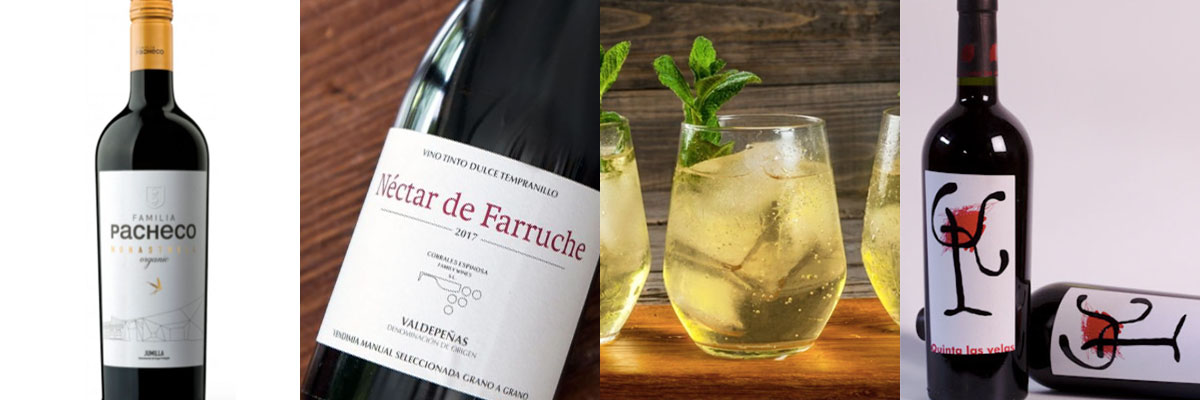
Familia Pacheco Monastrell Organic
 A waiter from the restaurant Vino Diario in Salamanca recommended this wine to me. He commented that it was an organic wine, made using Monastrell grapes and produced in the Jumilla Designation of Origin. Many years ago, to bring a bottle or carton from Jumilla was an insult to the hosts. For years, it was considered “second-rate”, where quantity was prioritised over quality.
Now, wines such as Pie Franco are made by Casa Castillo, which has received 100 points and made it onto Robert Parker’s prestigious list, the Bible when it comes to global wine study. It reached this milestone in 2020 and, in subsequent years, has maintained a far-from-inconsiderable score of 99 points.
Personally, I’m a big fan of the Monastrell variety. I think that with this type of grape, more promising wines can be made.
Familia Pacheco Organic is a young wine, made following completely natural processes both in the winery and in the vineyard, hence its classification as an organic wine. It is a ruby-coloured wine with very pronounced notes of red fruit and pepper. On the palate it is fruity, easy to drink, and balanced, being a good example of a Monastrell without ageing in wood.
I believe that this wine pairs perfectly with Thai, Chinese, and Japanese food.
But if you still have your doubts, check the price of this wine. The value-for-money is exceptional (5-7 euros).
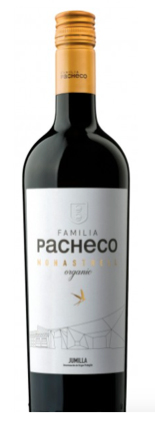
Néctar de Farruche – Corrales Espinosa
I love sweet wines. Tasting a port, a Pedro Ximénez, an ice wine, a Tokaji, or a Sauternes is a privilege, although, generally speaking, it’s a craving which is usually very expensive. This sweet Tempranillo is no exception. It is not cheap either (15-18 euros), especially considering that the bottle is only half a litre.
What I´ve just mentioned about the Jumilla region could also be applied to Valdepeñas. Almost all the low-quality wine from this wine region was exported but, as in the Murcia region, in Valdepeñas many winemakers and winegrowers have also managed to produce highly renowned wines outside Spain.
This sweet red wine is aged for 3 months in new American and French oak barrels. It is made using raisins from old Tempranillo vines. The grapes are harvested completely by hand and are selected berry by berry.
Néctar de Farruche has a lovely maroon colour. Its dominating aromas are of grapes and very ripe black fruits. The American oak gives it a touch of vanilla, whilst the French oak gives it a chocolate and coffee flavour. On the palate, it has a very fruity flavour with good acidity.
Pairing this wine with grilled foie is perfect, and a glass of this nectar with a chocolate dessert or a cheesecake is also a delight.
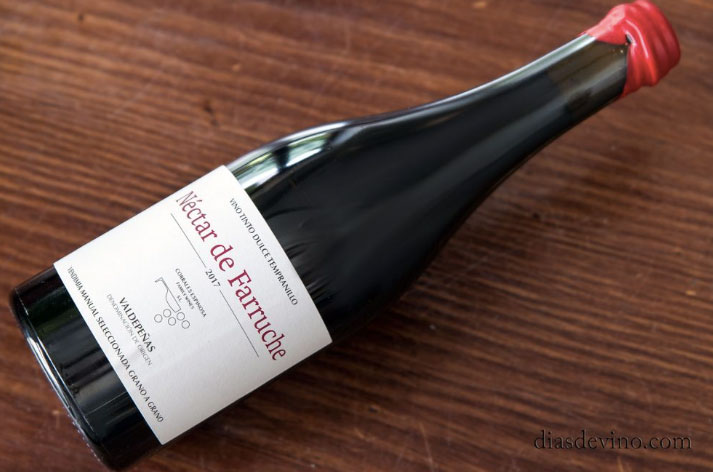
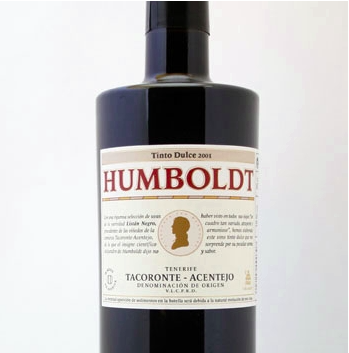
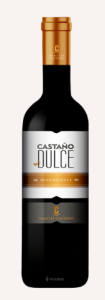
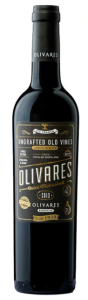
Since we’re talking about sweet red wines, I’ll recommend you another three which are exceptional:
The jewel in Tenerife’s crown:
And two Mediterranean wonders of the Monastrell variety:
Quinta las Velas, Bruñal
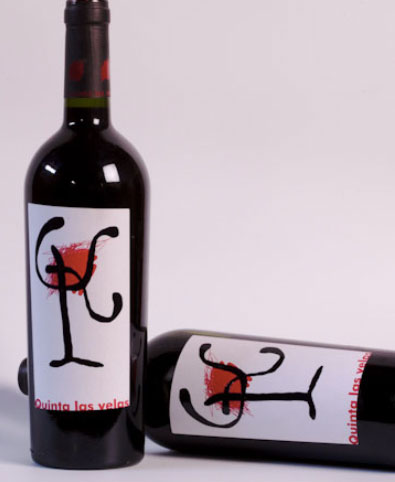 We will try this wine at our Salamancan wine tasting. Not long ago, I was in Ahigal de los Aceiteros, a beautiful village located in Los Arribes. Enrique, the alma mater of this winery, together with his wife, Mari Carmen, showed us the winery and the vineyard, and we began tasting their wines. How can we define Enrique? A winemaker from head to toe. His passion is contagious and his ambition to produce wines far from those of macro-wineries is evident. The winemaking process is totally natural, without oenological corrections and without adding sulphites. It is also neither filtered nor clarified.
The bruñal grape is a red variety exclusive to the Arribes del Duero region. It was on the verge of disappearing due to its low profitability, but fortunately in recent years it has been making a comeback thanks to its excellent quality.
Quinta las Velas Bruñal is aged for 12 months in French oak barrels. It has a deep red colour with ruby tones and is of medium-high intensity. Its principal aromas are floral with red fruits. On the palate, it has good acidity, good body and the aftertaste is lasting and fruity. It is a highly recommended wine.